Description
Bohumil Eliáš Sr., Space on the Diagonal, 1996
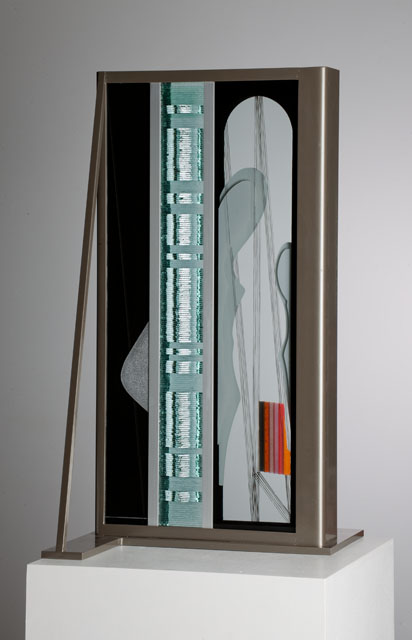
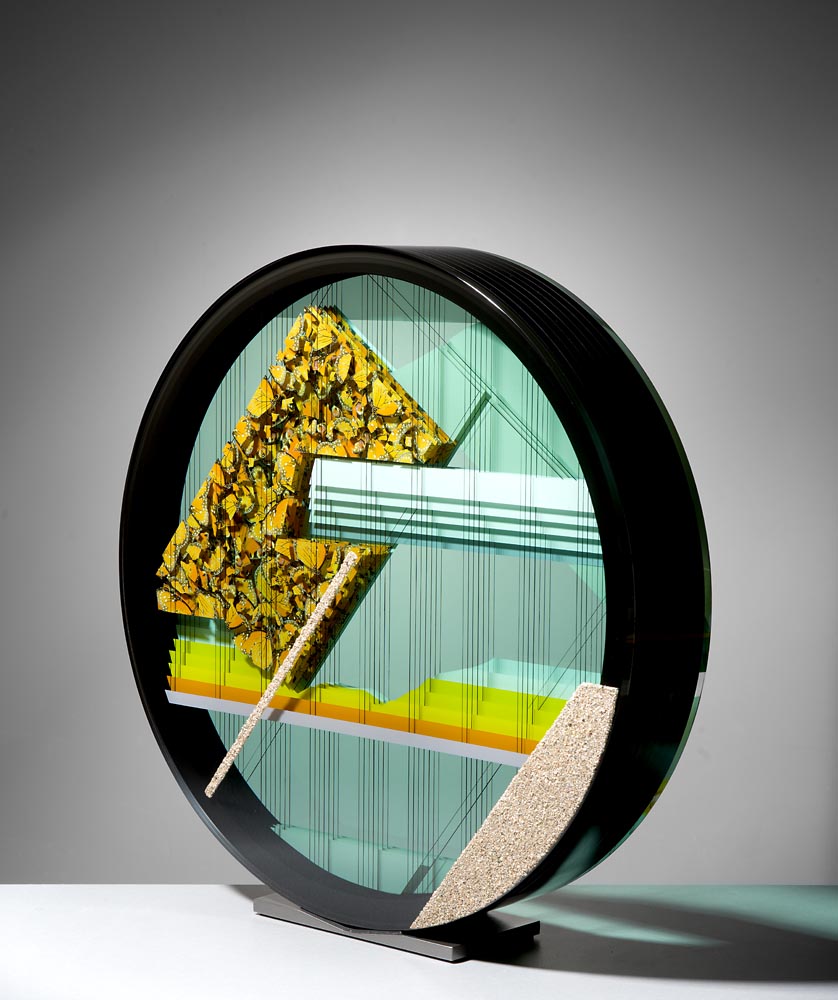
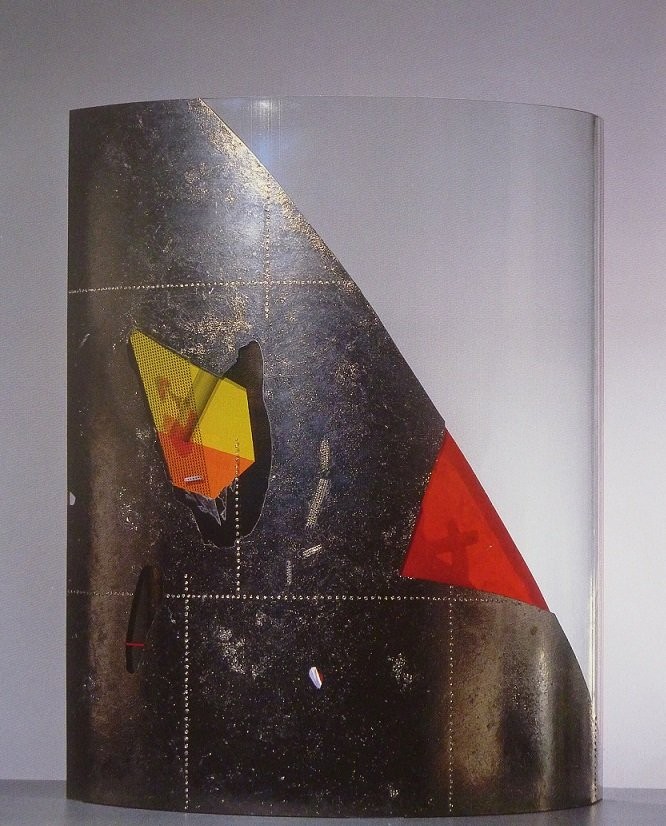
Space on the Diagonal is a striking glass sculpture in which Bohumil Eliáš Sr. brings together transparent glass, painting, geometric construction and spatial depth. A dominant diagonal divides the composition into several pictorial planes, creating tension between transparency, a dark painterly field and intense accents of colour. The work exists precisely on the boundary between image and sculpture, and it is within this territory that a significant part of Eliáš’s practice unfolds.
In Space on the Diagonal, glass is not merely the material from which the object is made. It functions simultaneously as a pictorial surface, a transparent opening, a spatial element and a support for painting. Bohumil Eliáš Sr. brings together several artistic principles that recur throughout his practice, creating a composition that cannot be classified unequivocally either as a painting or as a traditionally conceived glass sculpture.
The diagonal is the principal organising element of the work. A strong slanting line runs through almost the entire object, dividing its surface into several distinct zones. It is more than a graphic device. It determines the rhythm of the whole composition, guides the viewer’s gaze upwards and at the same time creates tension between the object’s stability and a sense of movement.
vizuálním pohybem patří k jeho nejsilnějším vlastnostem. This diagonal construction gives the work a distinctly dynamic character. Although the sculpture stands firmly and its base appears stable, the pictorial layer seems to be constantly shifting, rising or penetrating through the individual sections of glass. It is precisely this tension between physical stability and visual movement that gives the work much of its strength.
Eliáš works with transparency here in a highly deliberate way. Parts of the object are left almost completely clear and open to the surrounding space, while other areas are covered with dark paint. As a result, the transparent and opaque sections intensify one another. Empty space is not merely a background; it becomes just as important an element as the coloured and painterly surfaces.
The dark pictorial layer appears almost like a fragment of architecture or a technical construction. Its surface is neither completely smooth nor uniform. Subtle drawings, lines, dots and traces emerge within it, recalling a plan, a map, a structural drawing or the record of an unknown system. In this way, Eliáš creates a visual environment that is geometric and rational on the one hand, yet remains open to interpretation on the other.
Striking accents of colour enter the predominantly dark composition. Intense red and yellow are not used across broad areas, but are concentrated in smaller zones that function as optical points of orientation. The viewer’s gaze moves between them and gradually begins to register the individual layers of the composition as a whole.
It is precisely this approach to colour that reveals Eliáš’s experience as a painter. Colour is not merely a decorative addition to the glass object. It has a structural function – dividing space, creating tension, emphasising particular directions and, at the same time, altering the way we perceive the transparency of the material.
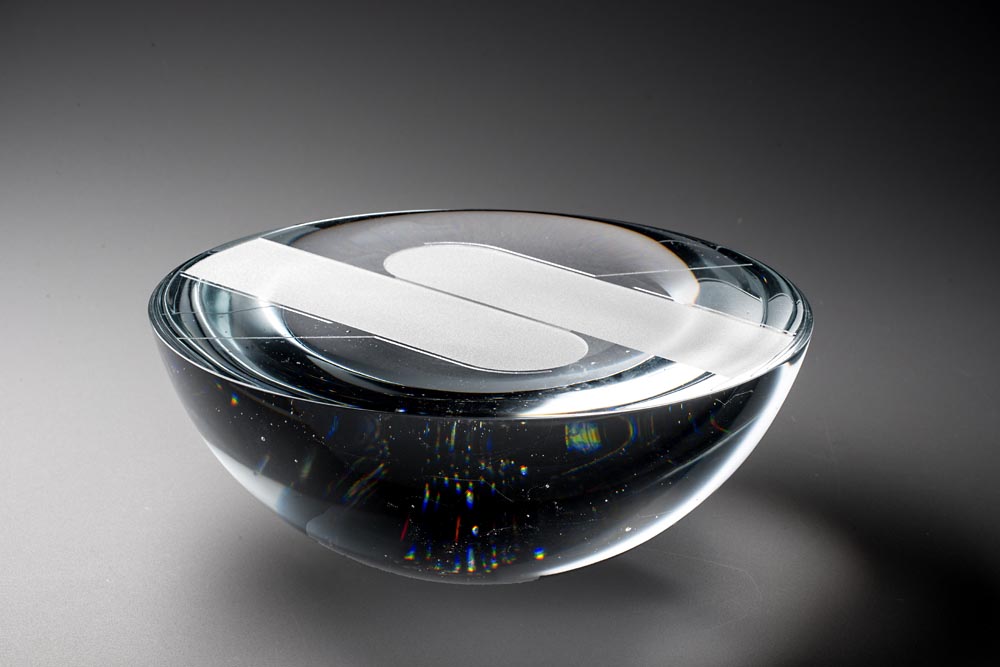
Glass, however, fundamentally transforms the pictorial layer. Unlike a traditional painting, the composition is not confined to a single plane. The transparent material allows light to pass through different parts of the object, connects the painted surfaces with the surrounding environment and creates genuine spatial depth. The viewer perceives not only what is on the glass, but also what lies behind it and what is visible through it at that particular moment.
The work therefore changes according to its setting. Against a light background, the dark and coloured areas become more pronounced. When placed in an open space or near a window, by contrast, transparency and the views through the object come much more strongly into play. Each environment enters into the sculpture in a slightly different way, becoming part of its pictorial structure.
Důležité je také měřítko. Výška jednoho metru dává dílu výraznou fyzickou přítomnost. Nejde o komorní objekt určený k pozorování z bezprostřední blízkosti, ale o plastiku, která dokáže organizovat prostor kolem sebe. Potřebuje odstup, aby bylo možné vnímat celou diagonální kompozici, ale zároveň odměňuje detailní pohled na malířské struktury a jemné zásahy do povrchu.
In an interior, Space on the Diagonal can function as a striking solitary piece in a representative setting, entrance hall, larger residential interior or office. It is particularly effective where it can respond to natural light and where sufficient visual space is left around it. The work does not require a visually dominant surrounding; it creates a strong enough focal point on its own.
From a collector’s perspective, the date of 1996 is also significant. The work was created at a time when Bohumil Eliáš Sr. already had several decades of experience with architecture, monumental commissions, painting and glass, and was able to bring these approaches together with exceptional confidence. Space on the Diagonal therefore does not feel like an experiment with a new medium, but rather the work of an artist who knows precisely how to use each artistic element to its fullest effect.
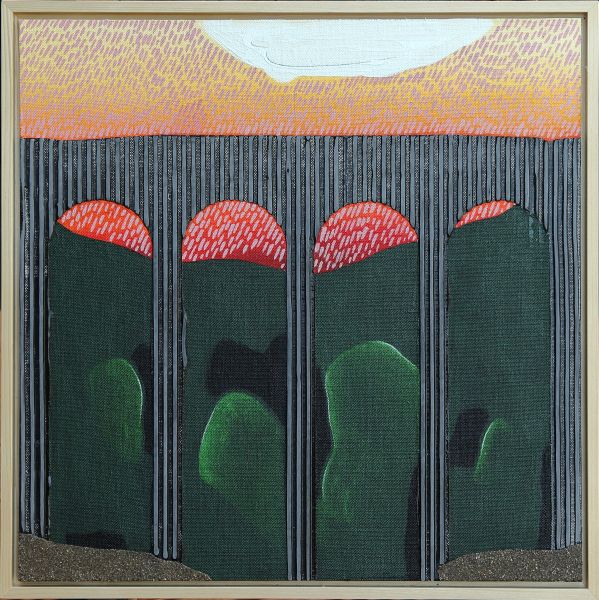
Within the context of this exhibition Two paths, one name, the work holds a particularly important place. It offers a very clear illustration of the difference between the approaches of Bohumil Eliáš Sr. and his son. In the father’s work, image and glass merge in such a way that painting penetrates the transparent material, creating several pictorial and spatial planes. Glass becomes a medium that extends the image beyond the traditional surface.
Space on the Diagonal thus very precisely captures one of the most distinctive strands of Bohumil Eliáš Sr.’s practice: the effort to transcend the boundary between image, object and space. Geometry is not an end in itself, colour is not decorative, and transparency is not merely a property of the material. Together, all these elements form a single visual system.
More about the artist >>> here <<<